
What even is account management?
What even is account management?
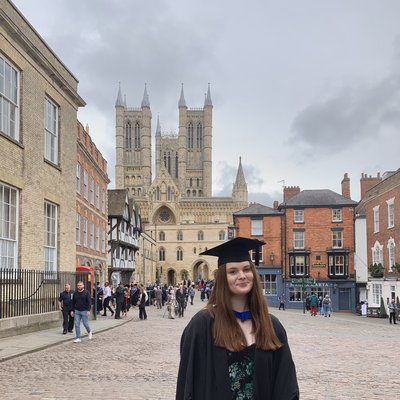
Having worked my way up to a promotion in the space of a year from Account Executive to Senior Acco…
Read article

Communication is arguably the foundation of good account management, and throughout my career I’ve been refining my communication skills to ensure I’m an asset to our agency and our clients. With AI’s increasing influence on our industry, and its undeniable usefulness in some areas of our work, I’ve been wondering whether it’ll ever be able to do what Account Managers do best - build relationships.
In every email, phone call, and Basecamp message, my personality is always visible. Professionalism matters, of course, but for me it’s important to put myself across, rather than simply hit key points of a message. It helps clients get to know me personally, which means they get more comfortable coming to me with questions and requests.
If I was to simply prompt AI to handle all my client comms, the ‘Caitlin’ of it all would be lost. Even if I fed it some of my previous emails so it could ‘learn’ my writing style, it wouldn’t be quite right and clients would probably notice. Plus, it’s on me to learn about what each client likes and dislikes about communication, and I wouldn’t trust AI to catch these signals on its own.
To us, AI is an important tool for handling background tasks and freeing up our studio for the work that requires human judgement. For larger projects, where we’re creating multiple versions of assets with minor differences, automation is essential, but when it comes to real creativity, we need our team.
Even when AI’s automation capabilities are taken into account, proofing needs to be done by a human - particularly when it comes to creative. AI can assess information, but it can’t replicate the creative judgement of a human.
A great example of this is a recent project of ours for a client. We needed to create thousands of personalised assets for local branches of our client’s business, and quality control was handled by our team, not by AI. It took longer than an automated process, of course, but it gave us a greater degree of certainty that no errors had slipped through the cracks.
It’s also essential that any creative is proofed by someone who understands the overall approach of the campaign and the design language of the brand. AI might be able to spot technical errors, but it doesn’t know about the nuances of the campaign or the intent behind the work.
Technically, it can - it can spot spelling and grammatical errors, and it can hold a vague ‘understanding’ of broad TOV rules. However, TOV in particular is heavily nuanced from brand to brand, and explaining those nuances to an AI bot and then asking it to proof some copy is time-consuming, complex, and unlikely to lead to the right result.
Copy is an invaluable tool for reinforcing brand values and personality, and building emotional connections and trust with customers. It needs to be crafted with purpose in order to hit the right marks and send the right message, and it needs a human eye (and brain) to proofread it to make sure that happens.
Building strong relationships with our clients is a huge part of my job, and it can take a while to build that trust. From my experience, there’s a noticeable tournament when trust is established, and that means that not only do they appreciate our approach and our output, but it’s clear that their customers do, too.
An agency/client relationship is somewhat transactional, but the emotional aspect is important. I like to approach every conversation as more of a colleague or partner to our clients, rather than an intermediary - it’s important to me to show that I’m genuinely invested in the client and the project.
The briefs we give to our teams are based on a deep understanding of the project at hand, the needs of the client, and our agency’s processes. If you lose the essence of a brief, then the finished product probably won’t meet the standards of our agency or the client, and we’ll be back to square one.
We’ve refined our briefing process so that it’s efficient and effective. AI has a tendency to overcomplicate briefs, adding unnecessary requirements and, in general, it lacks the single-mindedness that a good brief needs.
As an Account Manager, I talk to clients every day, and I’ve developed my own style of communication that has helped me build great relationships. AI’s presence is growing in our industry, and we use it sparingly at RKH to help us in certain aspects of our work. But I don’t think AI can ever take over that vital skill Account Managers need to have - the ability to build connections with our clients.
Caitlin and our Account Managers build relationships based on trust and understanding - it's how we create the best work for our clients. If you'd like to work with us on your next project, get in touch with us and let's make things happen.
Talk to us
Having worked my way up to a promotion in the space of a year from Account Executive to Senior Acco…
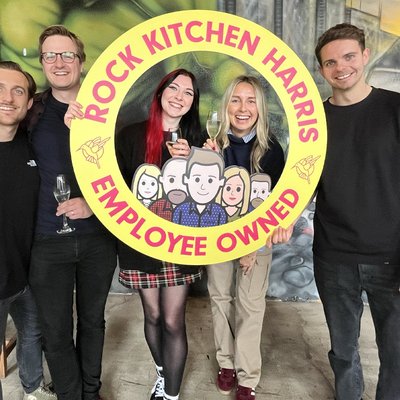
For our 40+ year history, relationships have been central to our success. As we’ve transitioned fro…

The question isn't whether technology is good or bad, but how we champion human connection in …