| 

In an increasingly divided and lonely society, people are looking for meaning, attachment and a sense of belonging. We find it in running clubs, the rise of community groups and more and more in brands.

Most brands would call their best customers loyal. A rare few could call them loyal followers: people who come back for more than the next purchase, who’ll make a very long journey, join a waitlist or defend the brand like it’s theirs. To those people, perhaps, those brands have become something akin to modern-day shrines.

Shrines tend to have three features in common: something to believe in, a journey worth making and a story worth keeping. We can use each of these as a lens to understand how brands develop deep emotional connections with consumers and as such can be viewed as modern-day shrines. The first of these features is about what a brand stands for, the second about a place to venture to, and the third about time.

Something to believe in

A shrine exists to honour something bigger than a single visit. Brands are no different. The strongest connections go beyond a single product or purchase, because customers aren’t just buying what a brand makes - they’re buying into what it stands for.

We only need to look at perfume brand Ffern to see how powerful that can be. They make four fragrances a year, one for each season, released on the solstices and equinoxes and made in small batches for members of their “ledger”. Getting on the ledger means joining a waitlist, and members commit to buying the fragrance before they’ve even smelt it, with some of their releases racking up half a million people on their waitlist. What’s fascinating is that the product is almost the last thing people experience. The storytelling around each release does the heavy lifting long before the product arrives at your door.

Ffern may be an extreme case, but the principle holds more widely. When people believe in what a brand stands for, they give it the benefit of the doubt. Investing in long-term brand building has been shown to make customers less sensitive to price rises and more forgiving of product missteps. In Ffern's case, they get buyers to commit to a perfume they've never smelt based solely on its story.

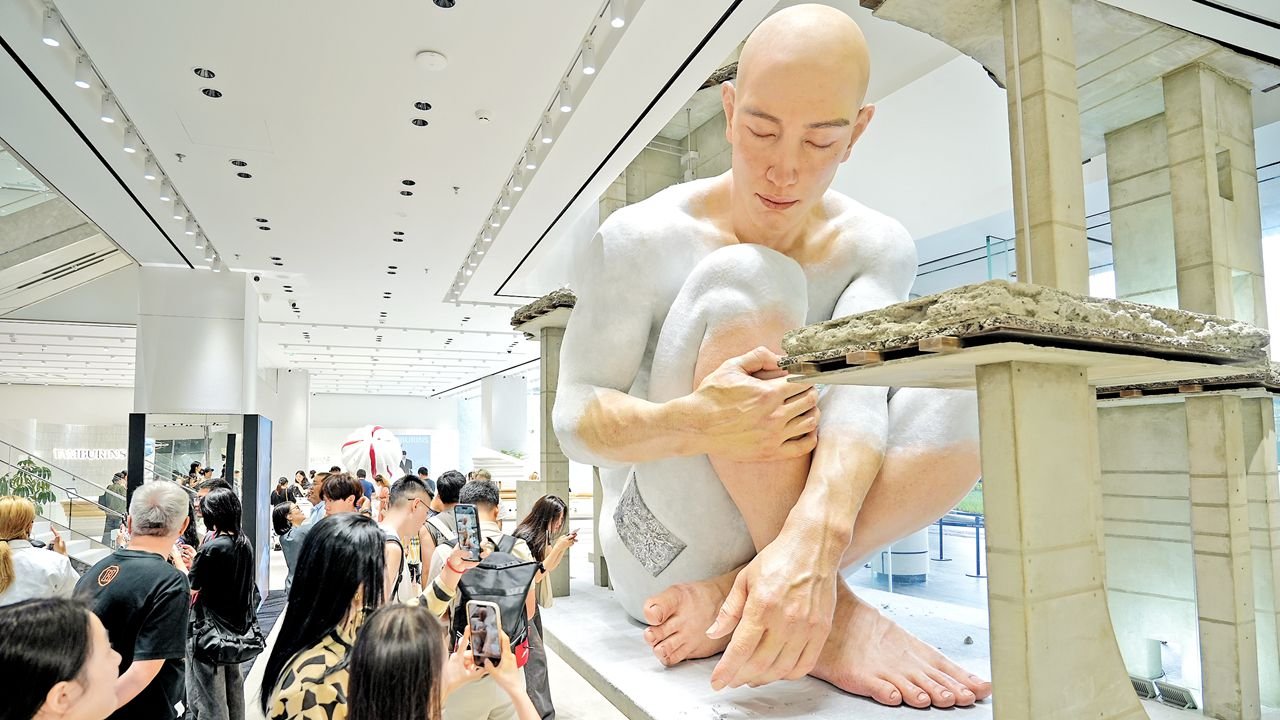
An art installation in Gentle Monster's Shenzhen 'Haus Nowhere' store, depicting an enormous figure sitting with his legs crossed
Gentle Monster's 'Haus Nowhere' store in Shenzhen

A journey worth making

Shrines are rarely on your doorstep, and the journey is part of what makes them matter. Social media allows us to discover and follow brands from all over the world long before we can visit them. But this can also create a longing for the physical spaces. For some brands the in-person shops are no longer somewhere you happen upon but somewhere you plan to go, for some they even book their holiday around it.

The brands that understand this are designing for the brand experience, not just the sale of the product. Korean eyewear brand Gentle Monster turns its flagships into gallery-like spaces full of art installations and kinetic displays. Its Haus Nowhere building in Seoul, has been described as a “14-story retail shrine”. It’s a place people go for the experience as much as the glasses themselves.

Meanwhile in the UK, Warhammer World in Nottingham is a destination where fans can step inside the universe they love, old and new players alike can explore exhibitions, try out new products and have a drink in the themed bar, Bugman's.

These places have become destinations in their own right: somewhere fans are excited about and willing to travel to just to get closer to the brands they love. Places to belong as much as somewhere to visit.

A story worth keeping

Most shrines have an origin story behind them. Protecting that story, and passing it on to future generations, is part of what makes them special. Brands can work the same way, protecting an original (whether that be a recipe, design or founder story) and making it relevant to new generations, and over time it becomes part of what people are buying.

Luxury brands have long understood this. Patek Philippe (whose watches can sell for six figures), turns ownership into custodianship: “You never actually own a Patek Philippe. You merely look after it for the next generation.” They’re selling a story. Their customers aren’t just buying a watch, they’re buying an heirloom, and becoming part of a story that started long before them and will carry on long after.

But it isn’t only luxury brands that do this. M&S’s Colin the Caterpillar has been an icon of British birthday parties (adult and kids alike) since 1990, selling over 15 million units. Over three decades, Colin has become a birthday tradition and that status is worth so much that when Aldi launched its own Cuthbert the Caterpillar, M&S took it to the High Court. People aren’t just buying any old caterpillar cake, they’re buying the original.

Warhammer World in Nottingham
Thousands of Warhammer fans visit Warhammer World every year

Shrines are a sign of connection and of belonging to something bigger. They become that because people keep returning to them, and because someone keeps looking after them.

Brands that become modern-day shrines work the same way. They aren’t created in a single campaign. That kind of attachment only builds up when a brand holds on to what it stands for long enough for people to notice, care and come back. That’s not to say campaigns don’t matter, but they work harder when they’re part of something consistent. Research from System1 and the IPA found that campaigns from the most consistent brands create 27% more Very Large Brand Effects and are more likely to change consumer behaviour. And investing in long-term brand building has been shown to make customers less sensitive to price rises, as found by Binet and Field.

Most brands won’t become shrines, but the ones that come closest aren’t defined by a single great idea. They’re defined by a clear brand strategy, and the patience to stick to it.

Give your customers something to believe in

We've been helping brands build something special for more than 40 years. Chat to us today and let's tell your story.

Get in touch
Annabel_Roderick

Annabel Roderick

Strategist