Celebrating creativity and connection at Cannes Lions
From human-led creativity to emotional storytelling and rooftop connection over rosé, Cannes Lions …
Being an open and honest brand is an effective way to build customer trust, but plenty of businesses aren't doing it. Read on to find out how brand transparency can help you get ahead.
There was a time in marketing where transparency from brands was an unexpected-yet-welcome surprise, or something that only came about when hands were forced, like reputational crises or public-facing apologies. Now, though, it’s essential to winning and maintaining long-term customer loyalty, and brands that shy away from it run the risk of being left behind by their more open competitors.
Consumers don’t just value brands based on their products or services anymore; honesty from brands around everything from processes to pricing is crucial in consumers’ decision-making. Younger people, particularly Gen-Z and Millennials, place serious importance on what brands stand for and how they communicate.
Kantar’s data suggests that if customers believe that a bank cares about its customers, the overall predisposition to the bank can improve by 25%. Nationwide, for example, has been the UK’s most trusted bank since September 2024, and in Q4 of that year it achieved the highest net gains in current account switching out of all UK banks.
Brands can make sales without using transparency in their marketing - people need products and services as a matter of convenience, as well as preference, after all. However - and it’s a large ‘however’ - transparency does more than drive sales; it helps brands achieve the top prize of customer loyalty.
A useful product or service might be good for the odd purchase - most of us have used a certain one-day delivery service from a certain trillion-dollar business on occasion - but if a brand’s values align with those of a customer, that customer is going to keep coming back. Looking at further data from Kantar and using Nationwide as a reference point again, the bank has been top of the UK Pricing Power table, despite having less attractive rates and prices than some of its competitors. Customers stay with Nationwide because the bank has earned their trust.
You don’t need to share confidential information or leak your secret recipe, but sharing useful, real information will immediately make you seem more human, more accessible, and more trustworthy.
Take pricing as an example. Being clear about why your product or service costs what it costs will go a long way to establishing stronger relationships with your customers. It might not directly lead to more sales, but it shows the reasoning behind it and gives customers food for thought when they’re making purchase decisions.
Clothing brand Percival is a great example of this - not only do they share interesting insights into the costs of being an independent brand, but they do it authentically, like they’re chatting to you on a personal level, rather than giving out financial lectures.
If you need to start charging more for your products, then explain why you’re doing it. Whether it’s the cost of supplies or a change in market rates, giving the rationale behind decisions goes a long way.
It should be easy for customers to get in touch with you when they need to. If they need to email your customer service team or they reach out to you on social media, your brand should respond quickly, openly, and demonstrate real care about their issue or question. If it’s a problem that’s taking a while to solve, keep them in the loop - don’t just wait to be prompted by a follow-up email. If you can’t reach the outcome they wanted, explain why that is.
Suzuki is a shining example of excellent customer communications - it’s been voted the top automotive brand for customer service seven times since 2019. When asked if they’d recommend Suzuki to someone else, 87% of customers gave a score of 9 or 10 out of 10.
People are more aware than ever about data practices and privacy, so when you’re capturing their data, explain how it’ll be used. Not only will this help build trust, but it’ll also help you collect more accurate data, which is the foundation of effective marketing.
As well as clear communication, storytelling is a very effective tool for building a more complete image of your brand. Instead of bombarding mailing list subscribers with new products, share stories about your brand to help them buy into what you’re doing and why you’re doing it.
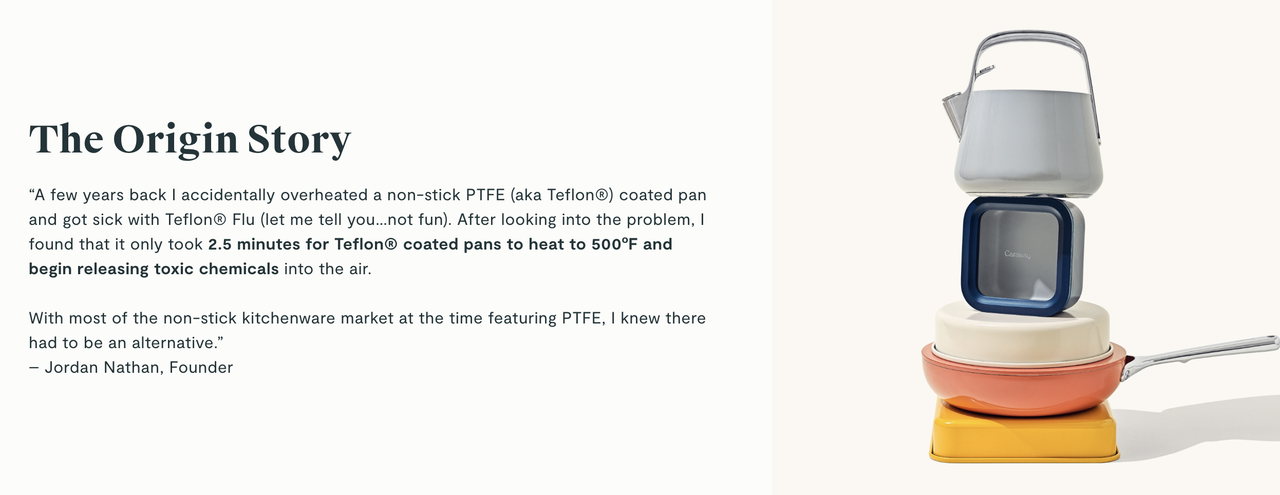
For a great example of storytelling, let’s look at cookware brand Caraway. The brand is built off the back of a real-life experience - after the owner contracted toxin poisoning from the cookware he was using, he decided to create a safer alternative.
So, you have a brand with a genuine purpose - creating safer, high quality cookware - that is transparent about what they’re doing and why. This isn’t a story created for marketing purposes; it’s real and personal, and it’s something that customers can relate to. Sharing the ‘why’ behind a product is effective in getting customers to buy into it, as they feel empowered to make an informed decision.

Transparency helps brands build emotional connections with consumers, and it helps those consumers make informed decisions.
Imagine you had to choose between two brands offering a similar product:
The choice is obvious, isn’t it? You’ll trust the transparent brand that makes you feel valued as a person, and you’ll keep coming back.
A study by Yotpo found that 59.3% of US shoppers will refer their friends and family to brands they trust, and 36.5% will spend more on products from a certain brand if they’re loyal to it.
Make transparency part of your brand purpose and you’ll attract customers who share your values, and people are likely to trust an open brand over a closed-off competitor.
Today's customers are more savvy - they’re wise to marketing gimmicks, and they’re careful with their trust. Invite your customers behind the scenes of your brand - share your processes, your reasoning behind business decisions, and you’ll make it much easier for them to trust you. From sharing stories and wins to owning up to mistakes, being transparent as a brand can help you stand out in your industry.
If you want the loyalty of your customers, you need to earn it, and brand transparency is the way to do it.
We help brands of all sizes build stronger, lasting trust with their audiences through carefully strategised campaigns. If you’d like to work with us, get in touch - we’ll be happy to chat.
Let's chat