Why Great Case Studies Win Customers

Why Great Case Studies Win Customers
Case studies, ‘recent projects’, ‘showreels’ - whatever you might call them, they’re one of the mos…
Read article

Personalised marketing has levels to it; some brands take it seriously, whilst others only do the basics. In this article, we'll guide you through all you need to know about delivering truly personalised marketing that makes your customers feel valued.
It’s easy to spot generic, catch-all marketing comms; you can usually tell from the subject line of an email, the first few words of a social ad, or the first seconds of content of an Instagram Reel. This type of marketing can be effective in certain contexts, but research has shown that personalised marketing makes a bigger impact with consumers.
In 2026, customers have high expectations of marketing, and they’re much more adept at spotting ill thought-out, rehashed, or simply lazy campaigns. According to McKinsey, 71% of customers expected personalised interactions with brands, and 76% felt frustrated when those expected interactions didn’t occur. Brands that are finding success in marketing are the brands who take the time and the effort to build real connections with customers, and personalisation is key to doing that.
Behavioural content
Make recommendations to your customers based on their previous behaviours. Streaming platforms use your past watches and listens to recommend songs, films, and shows you might like. Grocery websites recognise the items you add to your cart every week, and ask you if you’d like to add them again before you reach the checkout.
Newsletters
Greetings card brands like Thortful and Moonpig are smart marketers. I’ve bought birthday cards from these websites before, and they send me reminders when someone’s birthday is coming up, usually starting from a few weeks before the date in question. This is a particularly effective form of personalisation because when I receive that reminder, I often visit that specific retailer to buy the card I need.
It’s simple and it’s timely - they’re not reminding me about my brother’s March birthday in August, and they’re not overdoing it with the comms - they’re just sending a handful of emails to nudge me towards a purchase that is easy to forget about (for me, anyway).
Abandoned cart messaging
I’ve received emails saying “We saw you had your eye on this, how about 10% off?” after looking at an item for a while, or perhaps even getting as far as adding it to my basket before clicking off the page. It’s a smart way of encouraging a customer to come back, particularly when it comes to luxury or non-essential items that might come with a higher price point.
Dynamic shopping ads
You can target customers across their web behaviour with display and/or social ads for products they’ve looked at, and incorporate personalised offers into each ad to encourage people to return to your site and make that purchase.
Location-based marketing
Hyperlocalised promotions can work brilliantly. Targeting customers with location-specific deals when they’re within a certain distance of a branch of a coffee shop or a restaurant, for example, can leverage convenience to drive people to a store. Push notifications are the most effective way to do this, as they’re delivered instantly and they don’t require the user to have an app open or their phone unlocked.
Before you start deploying personalised marketing, you need to determine where exactly it’ll be most effective for you. Do you want to use personalisation for acquisition, for conversion, for growth, or for retention?
Acquisition
Use web behaviour data to re-engage your users and bring them back to your platform. If you’ve browsed holidays and flights recently, you’ll be familiar with seeing ads from airlines and holiday companies across the internet trying to tempt you back in.
Conversion
McKinsey’s research found that 65% of customers see targeted promotions as a top reason to make a purchase. Personalised conversion marketing needs to show that you’re paying attention to your customers’ interests and activities. Send personalised emails to customers who have abandoned their cart, or those who’ve signed up to your mailing list but are yet to make a purchase from you.
Growth
Promote new products and services, or offerings that are relevant to customers’ interests. Use their previous purchases and browsing behaviour to inform what you promote.
Retention
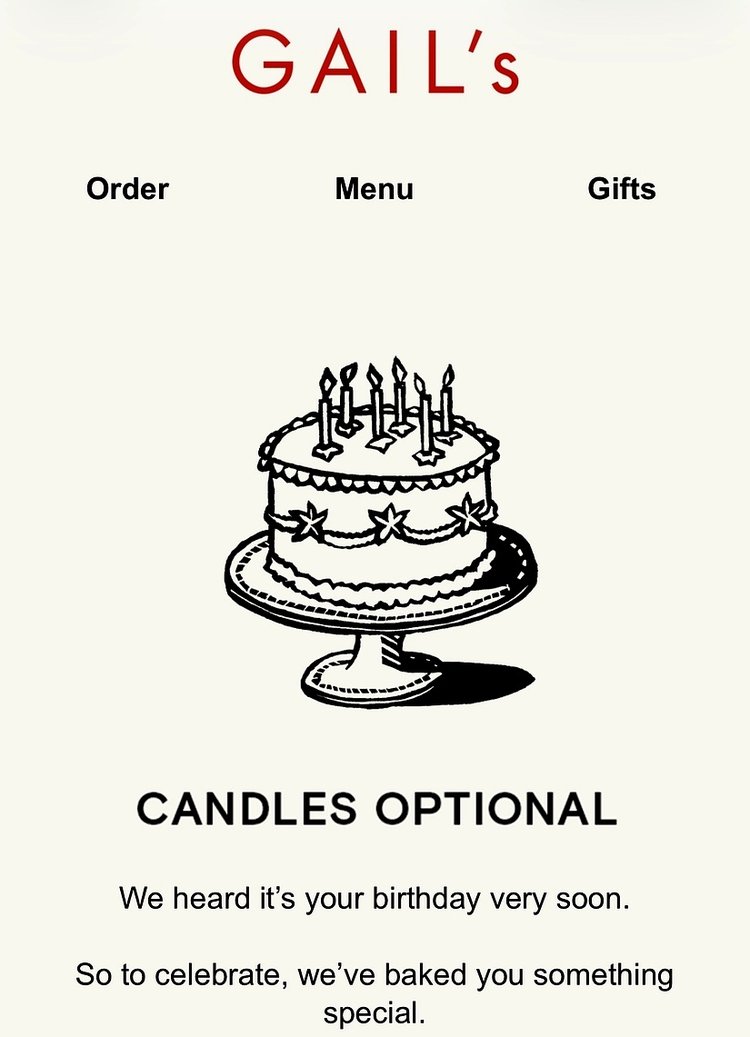
Encourage repeat purchases and long-term loyalty through follow-up offers, exclusive discounts, and rewards for returning customers. London bakery chain Gail’s sends an email to app users on their birthday, giving them a voucher for a free drink or baked item.
It’s all about timing, and quality over quantity. Customers value personalised marketing, but if you’re emailing them every day or two, you might find that they’ll start to switch off from your comms - and even your brand. There’s no black-and-white answer to this, but it’s important that you don’t overdo it.
It’s also important that your email journeys reflect changes in your customers’ actions. For example, if you send an email aimed at enticing a customer to your website, and then they visit your website, your next email should take a different angle, such as driving a purchase or a sign-up. If you keep sending generic messaging that doesn’t reflect changes in customer behaviours, they’ll quickly switch off.
You should base your decision on where and how you interact with your customers. Personalised web pages, email comms, and social media ads are all very effective methods in their own right, but just because email marketing resonates with one audience group doesn’t mean it will be as effective with another. Your research will tell you which channels will work best for which groups.
It depends on your resources and available budget. The first thing you can do is look for quick wins, like integrating first names into email greetings - it’s a small step, but it turns super generic marketing emails into personalised communication. Own an ecommerce business? Look at connecting your product listings to your ad manager platform and running dynamic shopping ads to gain sharper, more detailed insights into what your customers are interested in.
In order to create effective personalised campaigns, your audience needs to be large enough, so you need to build retargeting audiences to determine if they meet the requirements. If you do have the audience base required, then you’re looking at a whole range of possibilities.
A/B testing is an effective way of trialling different approaches. You could run different frequencies of communications for different demographics, or test different levels of discount based on how long people have been customers of your brand. Run your tests, record your findings, and refine your output based on what you discover.
A/B testing can sound complex, but it really doesn’t need to be. Test your personalised comms against non-personalised comms, and make one change per channel, per test. See which variants your audience is engaging with, and use those findings to build an ad or ads that incorporate the
It certainly can. AI’s capabilities have opened up all manner of creative possibilities for marketing, and if it’s used correctly, it can give yours a significant push. That’s not to say you should just hand it all off to AI and see what happens - far from it - you can use AI as a tool to help predict trends, learn from customer behaviour, and support your marketing strategy. Generative AI, in particular, can help you scale your content efficiently, so you can put new campaigns out into the world more quickly.
Test the tools you have to see what AI integrations they offer - many tools are using AI to improve efficiency and give you greater access to audience behaviours and insights. Mailchimp, for example, is using AI to analyse recipient behaviour and determine the ideal frequency and timing of emails, so marketing emails can be sent at the perfect time.
Personalised marketing drives brand loyalty, better customer outcomes, and stronger financial returns compared to generic campaigns. When the comms are more relevant to the customer, they feel a stronger reason to engage, and you’re more likely to turn a potential customer into a regular. With the right strategy, content, and creative, you can establish your brand as a trusted purveyor of personalised marketing.
From concepts to campaign delivery, we know what makes marketing work. Get in touch with us today to discuss getting real results from your next project.
Let's talk
Case studies, ‘recent projects’, ‘showreels’ - whatever you might call them, they’re one of the mos…

Super sharp, ultra-shiny marketing isn't what people are looking for anymore. They want real, …