
The best campaigns know what success looks like

The best campaigns know what success looks like
Read article

Many businesses continue publishing new content while older pages quietly decline in performance, often without realising how many missed opportunities already exist within the content they already have.
Over time, websites naturally build up outdated information, duplicate or overlapping topics, underperforming pages, inconsistent messaging, and content that no longer reflects what users are actually searching for.
Some level of content decline is completely natural over time, especially as search behaviour, user expectations and search engines continue to evolve. Regular content audits help ensure your website is still working as hard as possible for your business by identifying what may be holding performance back, where improvements can be made, and where new opportunities exist.
A content audit is a review of the content across your website to understand how well it’s performing and whether it’s still supporting your SEO, user experience and wider business goals.
Rather than simply looking at traffic numbers, a content audit helps identify what’s working well, where improvements can be made, and where missed opportunities may be limiting performance.
At RKH, our content audits are designed to identify opportunities to:
Search engines have become much more sophisticated in how they evaluate content quality. Google now looks beyond simple keyword usage and places greater importance on content that is genuinely useful, relevant and helpful to users.
Google increasingly prioritises content that:
At the same time, outdated, duplicated or low-value content can hold websites back and make it harder for stronger pages to rank.
Many websites naturally build up years of older content that no longer reflects current search behaviour or user expectations. Without regular review, this can gradually impact visibility, engagement and overall website performance.
Regular content audits, typically every 6 to 12 months depending on the size of your website, help ensure your content continues working as hard as possible by identifying what is performing well, where improvements can be made and where new opportunities exist.
One of the biggest misconceptions around content audits is that they’re only used to remove pages. In reality, they’re often far more useful for identifying opportunities within the content you already have.
That might include:
Content audits can also give businesses a much clearer understanding of how people are already finding their website.
Using tools such as Google Search Console, it’s possible to identify:
In many cases, improving existing content can be far more effective than constantly creating new pages - especially when strong foundations are already there.
Declining traffic on older content
Content that previously performed well can gradually lose visibility over time as search behaviour changes and competitors continue improving their own content.
Keyword cannibalisation
Sometimes multiple pages end up targeting very similar topics or search terms, making it harder for search engines to understand which page should rank.
Thin or outdated pages
Older content may no longer reflect your current services, industry changes or what users are actually looking for.
Missed conversion opportunities
Some pages may still attract traffic but do very little to guide users towards an enquiry, purchase or next step.
Gaps in topical authority
Content audits can also highlight areas where competitors are covering topics in more depth, revealing opportunities to strengthen your own content strategy.
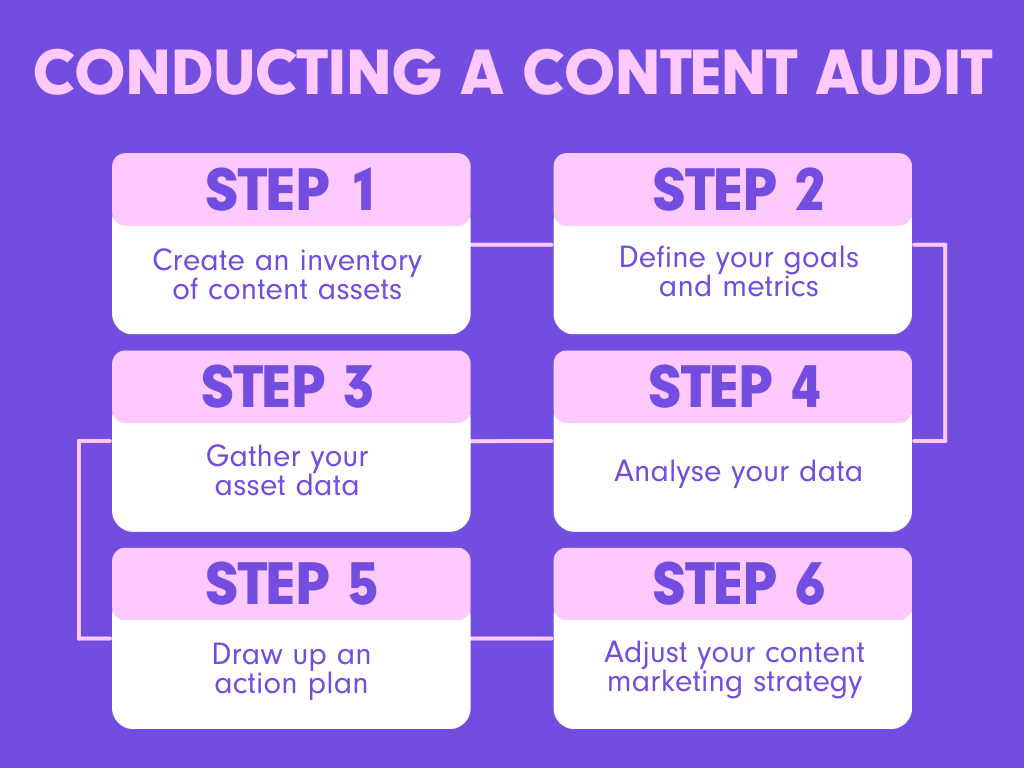
While content audits are often closely associated with SEO, the insights they uncover can support wider marketing activity too.
For paid advertising, content audits can help ensure landing pages remain relevant, accurate and aligned with campaign messaging. This helps create a more consistent experience for users and ensures the content people land on properly reflects what they were expecting from the ad itself.
Content audits can also help businesses better understand which topics resonate most with their audience, helping shape future campaigns, content planning and wider messaging strategies.
By understanding what content is performing well, where users are engaging most, and where opportunities exist, businesses can make more informed marketing decisions across multiple channels - not just organic search.
A content audit is one of the most effective ways to improve the performance of an existing website without always relying on creating new content.
By understanding how your current content is performing, where gaps exist and where improvements can be made, businesses can make more informed decisions around SEO, content strategy and wider marketing activity.
In many cases, some of the biggest growth opportunities are already sitting within the content you already have.
Chat to us today to see how we can dig into your content and get more from what you've got.
Let's talk

Anyone can boast about what their brand values are, but brands need to be putting those values into…